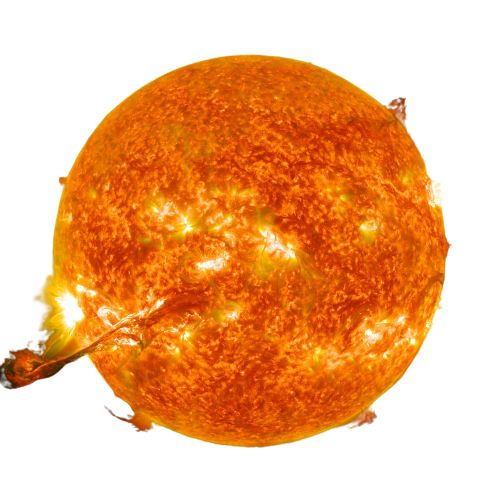
The Sun
The International Astronomical Union (IAU) defines a planet as a celestial body that meets three criteria:
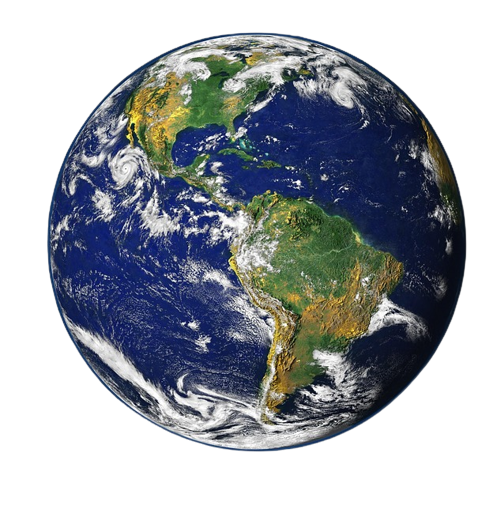
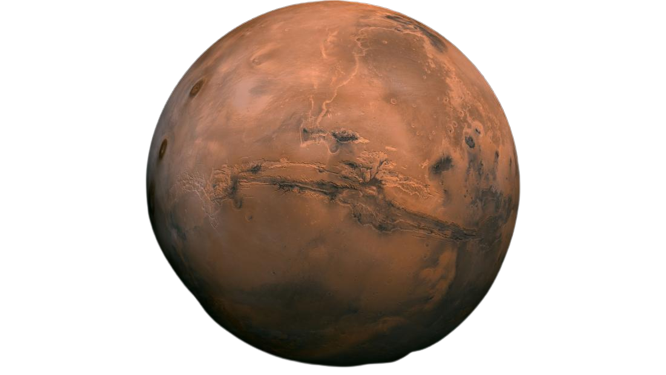
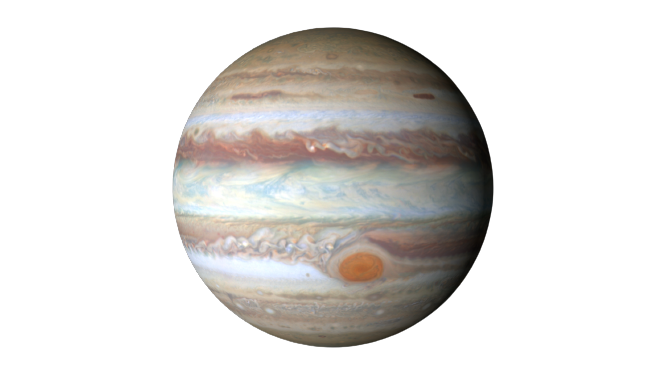
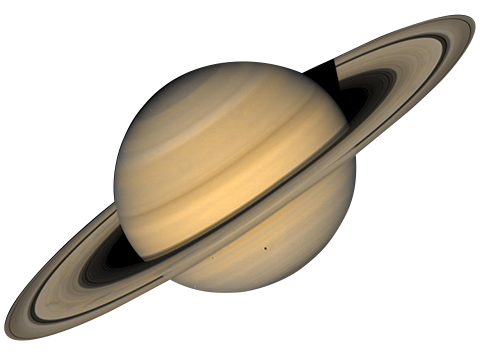
In our solar system, there are two types of planets :

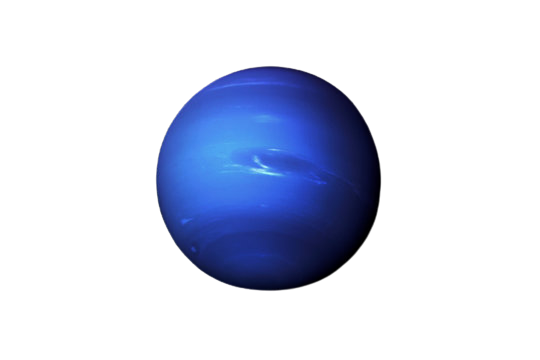
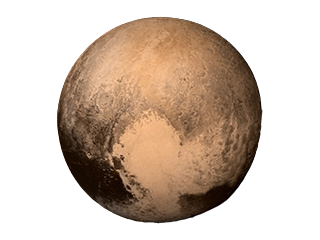
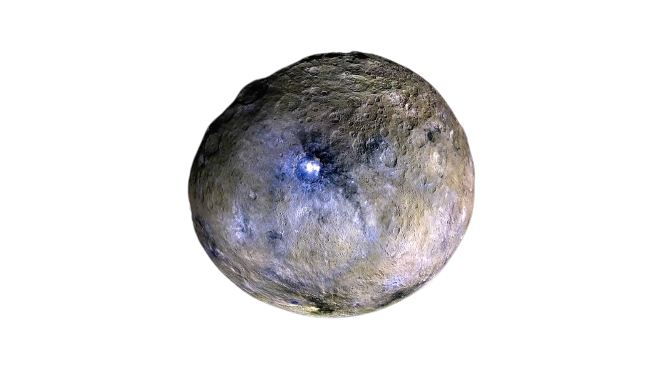
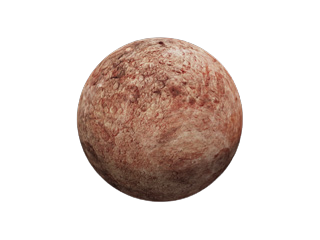
A dwarf planet is the planet which does not obey the third criterion for the definition of a planet. It means that it does not clear or accumulate other objects from its path. The dwarf planets are farthest from the Sun, than any other planet. These include Pluto, Eris, Ceres, Makemake, and Haumea. Most dwarf planets are located in the Kuiper Belt, a donut-shaped region of icy bodies beyond the orbit of Neptune, except Ceres which lies in between Mars and Jupiter.
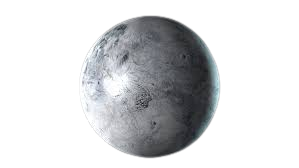
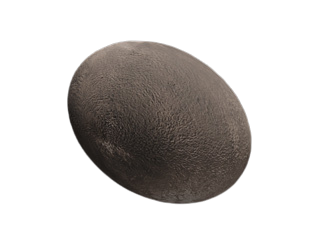
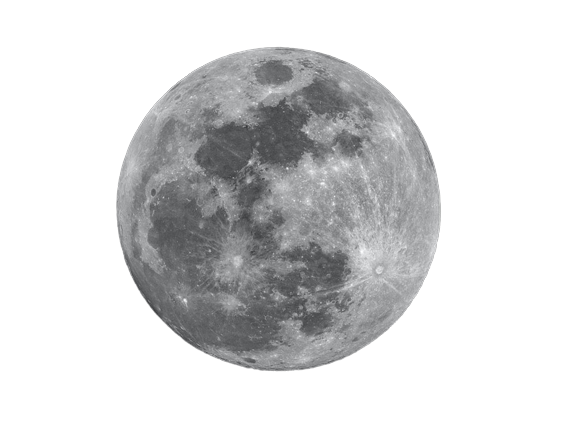
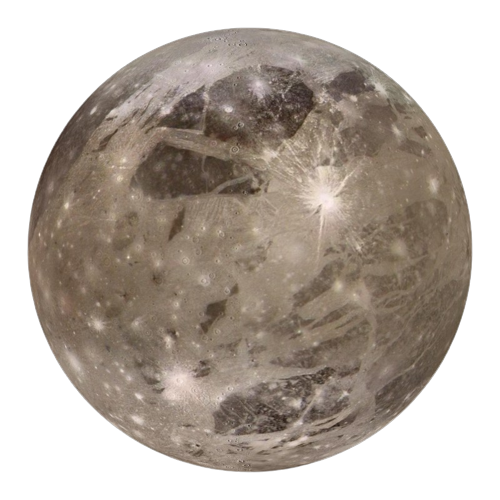
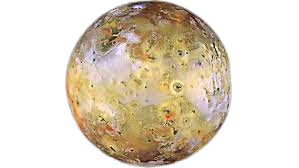
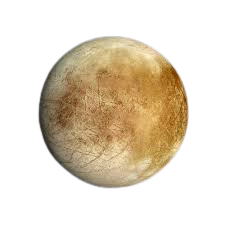
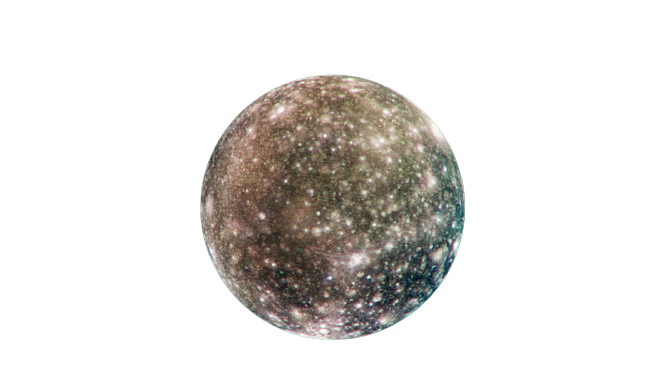
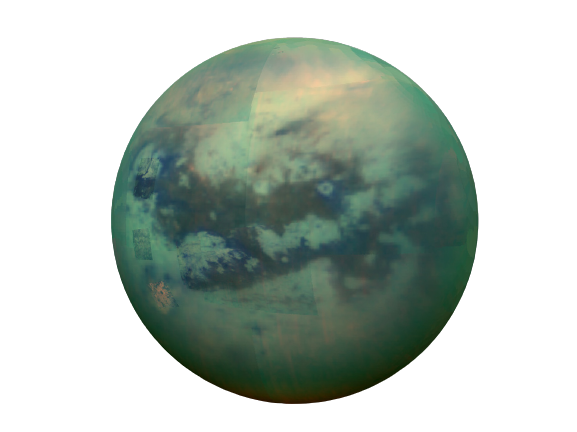
A moon, also known as a natural satellite, is a celestial body that orbits a planet in the space. It is relatively small with respect to its planet and is held in orbit due to the gravitational attraction between them. Based on the orbits, a moon is classified in two separate categories: (a) Regular moon, which has prograde orbit (in the direction of its planets' rotation), lies close to the plane of its equators and is of bigger size as compared to the other category. (b) Irregular moon, whose orbit can be pro- or retrograde (against the direction of its planet's rotation), often lies at extreme angles to its planet's equators and is generally less than 10 kilometers in diameter. Moons come in various sizes, shapes, and compositions, and they can exhibit a wide range of features, including surfaces with craters, mountains, valleys, and even atmospheres and hidden oceans beneath their surfaces. Currently, 297 moons are known to be present in our solar system. Some notable moons of our solar system are :
The interplanetary space or medium refers to the vast regions of space that exist between the different bodies within a solar system. It includes interplanetary dust, cosmic rays, and hot plasma from the solar wind. It is mostly a near-vacuum environment, and its density is very low, decreasing in inverse proportion to the square of the distance from the Sun. The temperature has extreme variations due to the lack of thermal regulations. The objects in direct sunlight can become very hot, while those in shadow can become extremely cold. Additionally, interplanetary space is bathed in solar radiation, including visible light, ultraviolet radiation, and other forms of electromagnetic radiation emitted by the Sun. All the celestial objects orbit the central star in interplanetary space following elliptical, circular, or even hyperbolic trajectories, depending on their initial velocities and the gravitational forces acting on them. Spacecraft travel through this environment to reach their destinations, using gravity assists from planets to adjust their trajectories and conserve fuel. It serves as a medium for the interactions between numerous components of the solar system and helps in understanding mechanisms of the same.
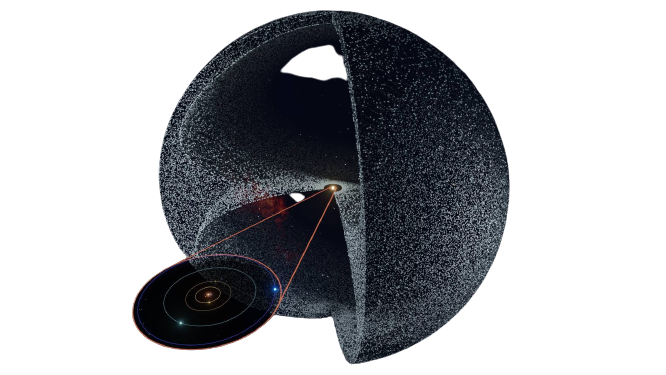
Beyond the orbits of the planets, there are regions full of icy objects known as the Kuiper Belt and the Oort Cloud. Similar to the asteroid belt, the Kuiper Belt is a region of leftovers from the solar system's early history. It seems to be a thick disk or a donut. The Oort Cloud is a predicted or hypothetical collection of spherical layers trillions of of icy bodies, comets and planetesimals farther away than everything else in the solar system. It surrounds our solar system at a distance between about 2,000 and 100,000 astronomical units (AU) from the Sun, in a bubble shape. It is the most remote and unexplored region of the solar system. It was named after the Dutch astronomer Jan Oort, who proposed its existence in the mid-20th century. No missions have been sent to explore the Oort Cloud yet, but five spacecraft will eventually get there. They are Voyager 1 and 2, New Horizons, and Pioneer 10 and 11. However, it is so distant that the power sources for all five spacecraft will be dead centuries before they reach its inner edge. Thus, its exploration remains a challenge for future space missions. A rough illustration of the Oort Cloud is shown in the diagram at the right side.